Proyecto fotográfico de Jaio: «Women are beautiful. Llámame Eulalia». Mengyin Huan.
Los trazos que no piden disculpas
La conocí un día cualquiera de la mano de un amigo que me llevó hasta su tienda en el Casco Viejo de Bilbao. El timbre de su local en la calle Tendería hizo un clin y de pronto la atmósfera cambió. Al fondo, entre tazas, teteras y rollos de papel xuan estaba ella, con los ojos puestos en un cerezo que aún no existía. Y, por supuesto, se convirtió en mi profesora de pintura china, en ese lugar donde hacía magia y conseguía que gente torpe como yo, se creyera capaz de realizar algunas piezas bellas.
La pintura Sumi-e (墨絵 también 水墨画) es una técnica de dibujo que se desarrolló en China entre los siglos VII y IX, que fue luego introducida en Japón a mediados del siglo XIV por monjes budistas zen. Inicialmente era monocromática, pero luego ha ido evolucionando a color. Los tres elementos principales son: la tinta negra realizada con polvo de carbón, la llamada tinta china, conocida por su profundidad y sutileza; el pincel que caracteriza la escritura tradicional, que se fabrica en China desde el Neolítico y es el que el pueblo chino utiliza para escribir y dibujar desde hace miles de años; y el papel xuan o papel de arroz que no se descompone ni se pudre, y proporciona una superficie perfecta porque absorbe la tinta de una manera especial.
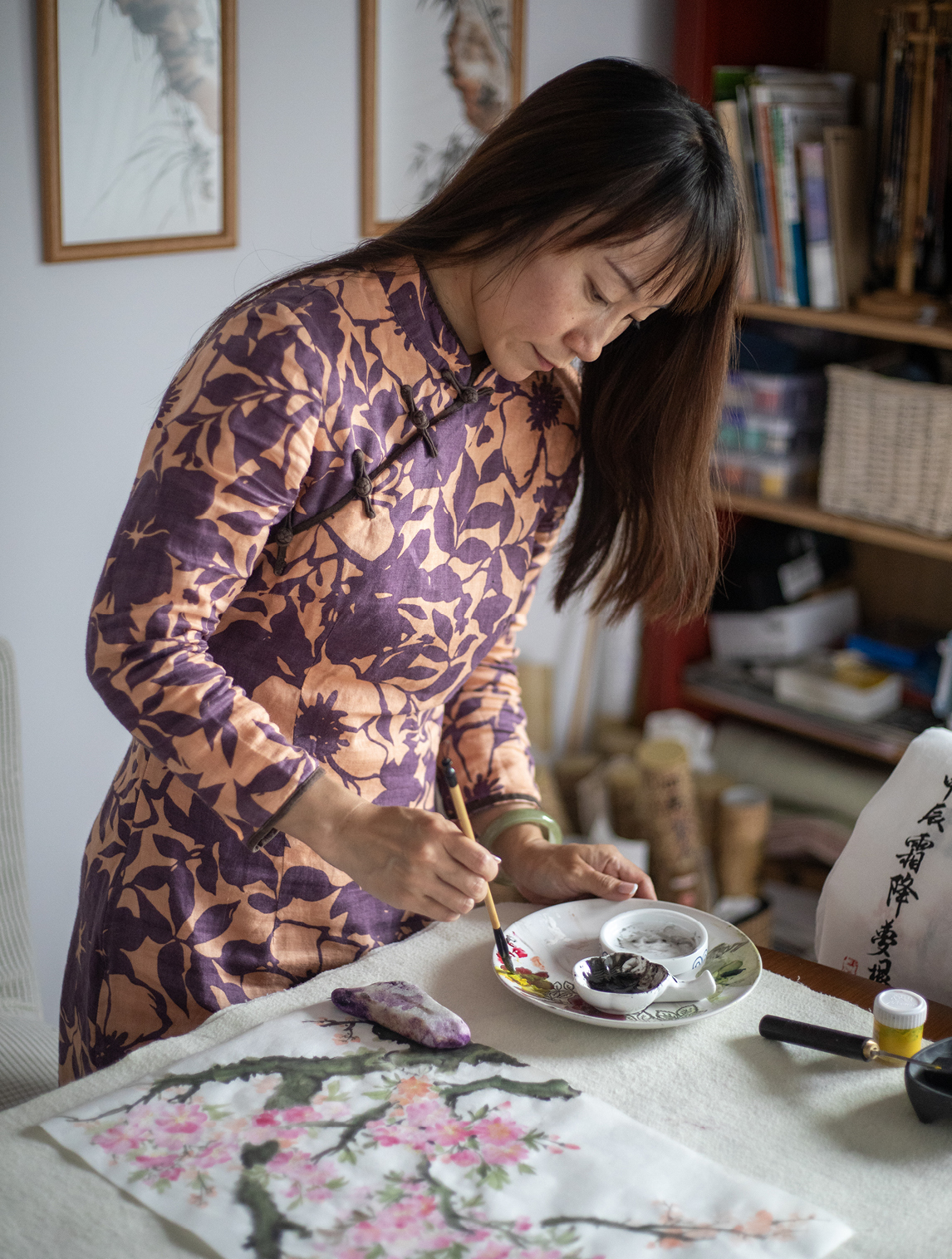
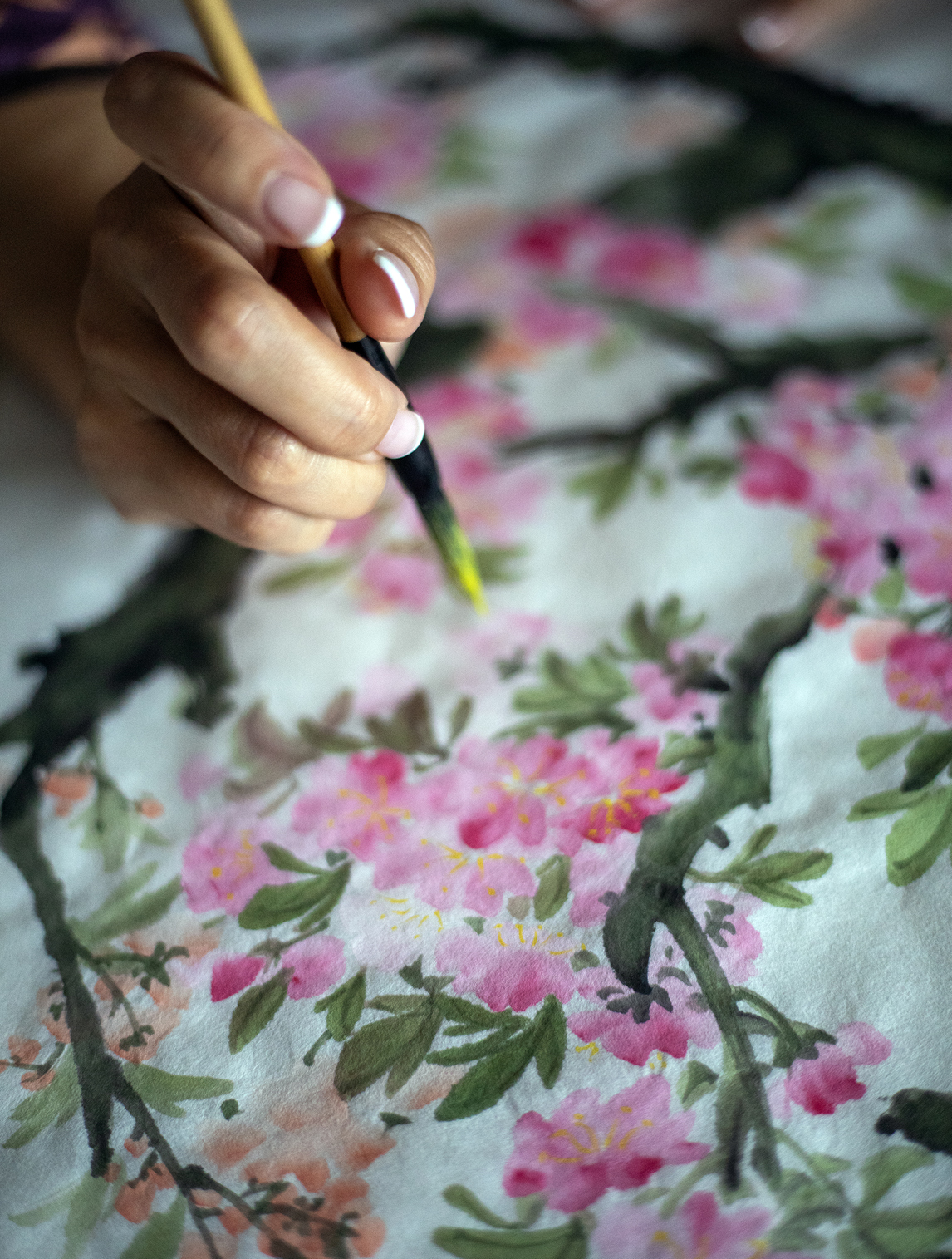
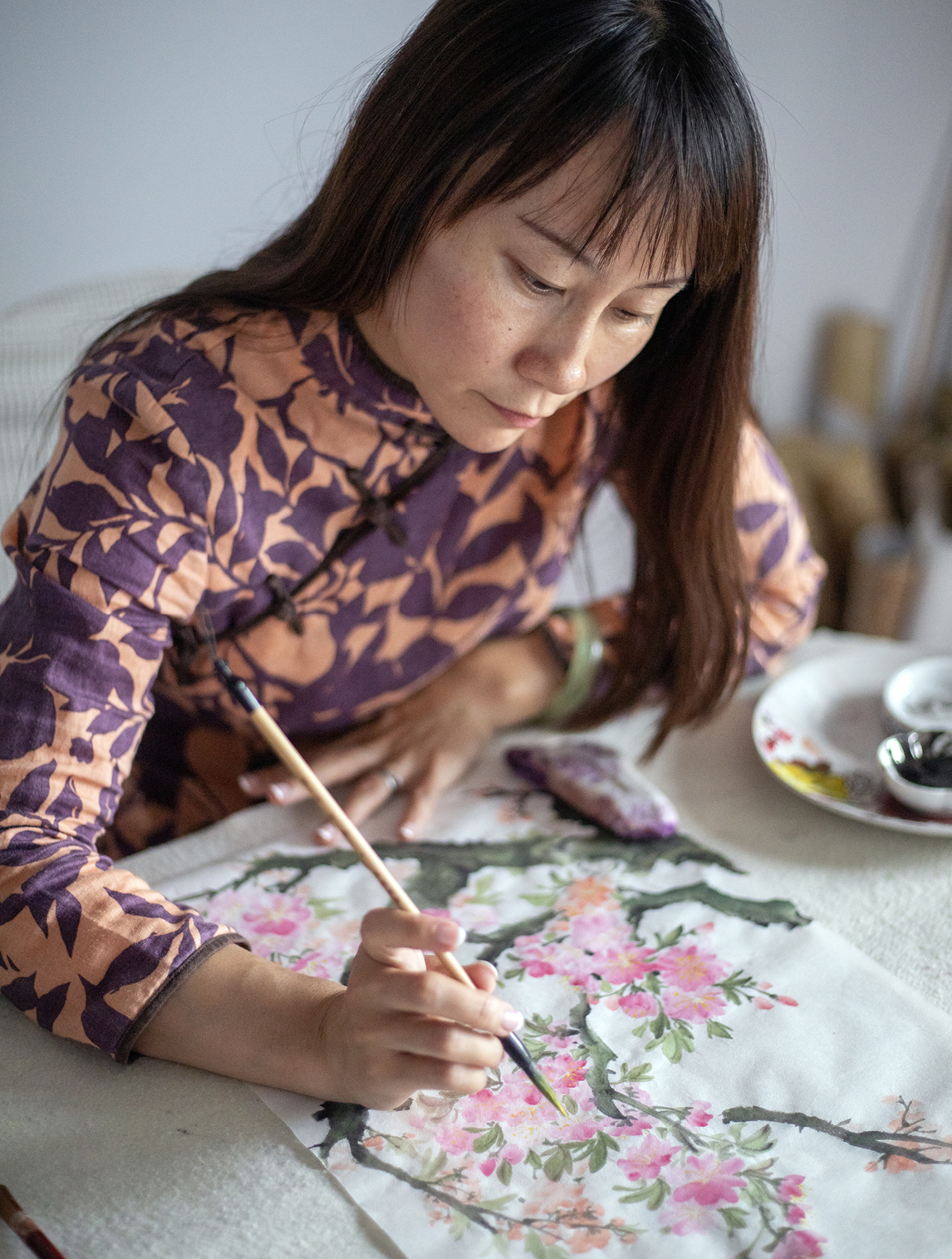
Hay algo en Mengyin y en su manera de sostener el pincel, entre el índice y el pulgar, con la muñeca suspendida en el aire, que recuerda a una danza que sólo ella conoce. La luz de la ventana del estudio le da ese aire pensativo de alguien que sabe muy bien qué pincelada tiene que dar ahora, con precisión, delicadamente, sin prisa… con el control exacto de humedad en el pincel y la carga adecuada de pigmento en la punta… trashhhh y todo florece. Cada pincelada y cada espacio en blanco en su pintura transmiten la emoción y el pensamiento que tiene ella en ese momento, de tal modo que no sólo ves su obra, cuando la miras, sino que también tienes la sensación de sentir sus pensamientos a través de ella.
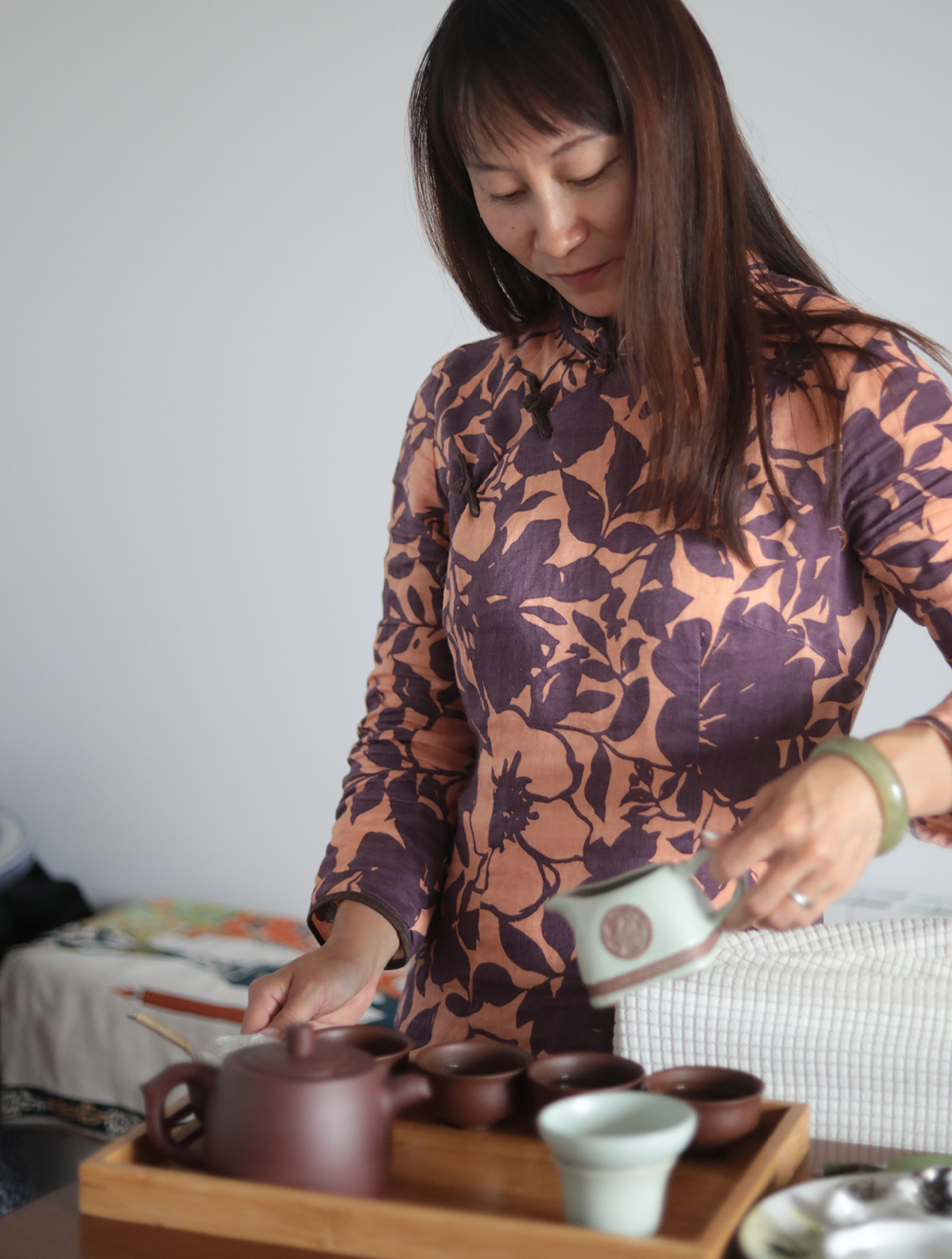
Mengyin no enseña, contagia. Sus clases son rituales. Entre música zen y sorbos de té del Tibet, explica cada ejercicio como si te contara un secreto familiar. “Simplicidad en forma pero riqueza en significado”, dice, y no sé si habla de la pintura o de sí misma. Es fuerte y delicada a la vez, como una rama de bambú que no se rompe ni cuando la azota el viento.
Hay algo profundamente feminista en la forma en que enseña. No grita, no impone. Genera un espacio donde no hay que pedir permiso para crear. Donde la belleza no se mide por la perfección del trazo, sino por la intención con que se traza. Y eso es revolucionario.
Tiene una forma de hablar que no interrumpe, sugiere. Nunca corrige con dureza. Dice cosas como “muy interesante… y quizá podrías también…” y de pronto te ves pintando con más confianza, como si supieras algo que no sabías que sabías.
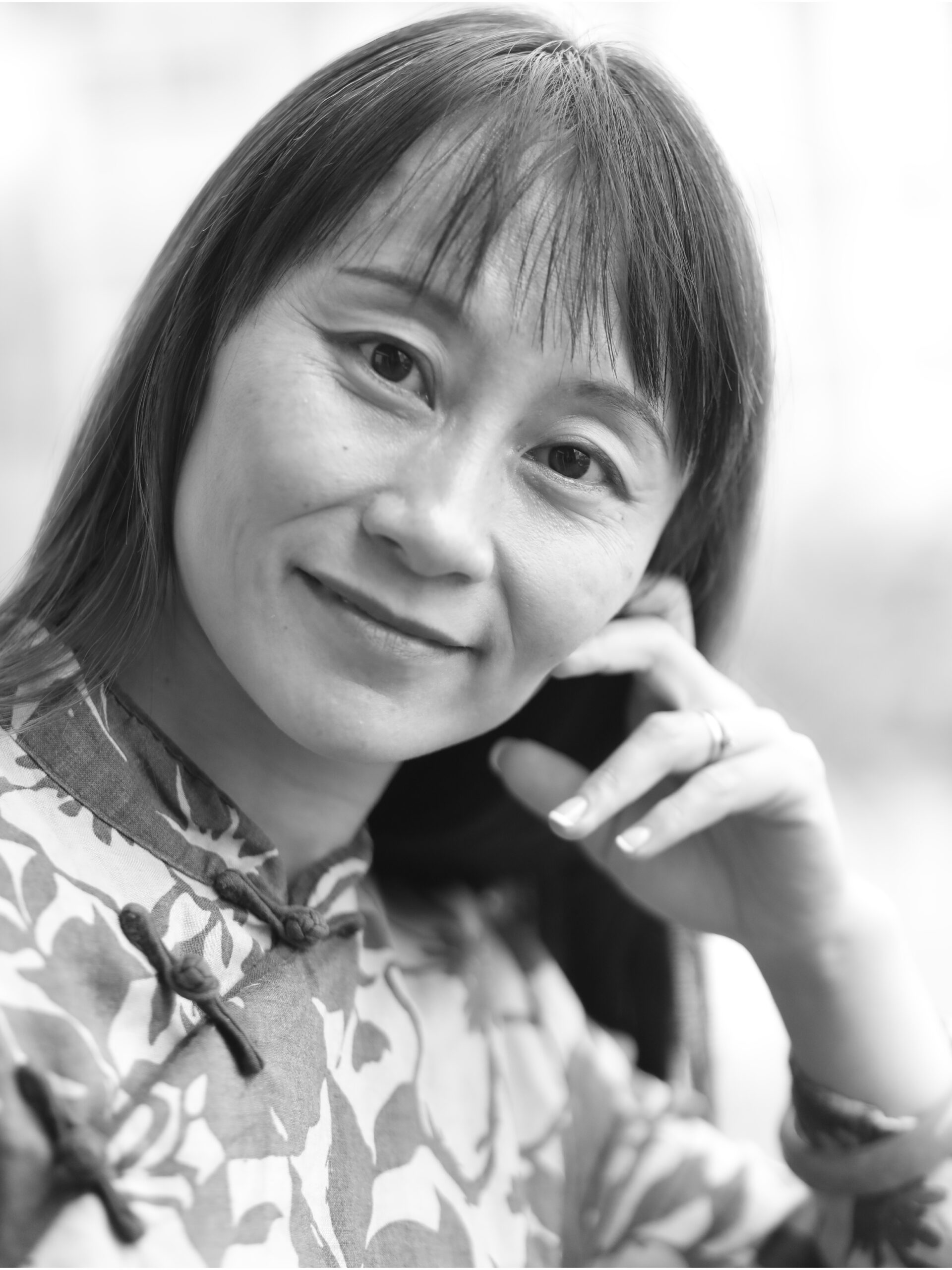
El día en que le hice el retrato, la luz era limpia y paciente. Mengyin se apoyó en la barandilla del balcón con la misma precisión con la que dibuja una montaña en la niebla. No posó, simplemente fue ella. En otra foto, la ves sirviendo el té, una ceremonia en sí misma. En otra, ajusta la humedad del pincel como quien afina un instrumento de cuerda. Y hay una donde, concentrada en la pincelada, da toques de luz a cerezos en flor, el único momento en que no sonríe, pero aún así brilla.
Las manos de Mengyin han pintado cientos de cuadros. Pero también han sembrado algo más difícil de cuantificar, y es esa fe firme en que lo sencillo también tiene derecho a ocupar espacio. Que una pincelada bien dada, como una palabra bien dicha, puede abrir mundos.
Mengyin es como una orquídea salvaje de esas que nos enseña a pintar, elegante, sin artificio, precisa, sin rigidez, profundamente viva en su sencillez. Hay un eco entre su manera de estar en el mundo y la tradición pictórica que encarna. Como las orquídeas que pinta, esas que brotan solas entre las rocas, sin pedir permiso, con tallos curvos que no se doblegan, y emitiendo su aroma aunque nadie esté ahí para percibirlo, ella también ha encontrado la forma de florecer en tierra extranjera, sin perder su raíz.
La pintura china no busca dominar la naturaleza, sino entender su espíritu. Y tras la lente, veo a Mengyin que, en cada trazo, revela el suyo, que es fuerte, paciente, con una belleza que no grita pero se queda. Me fui de su estudio con la certeza de que el arte no necesita grandes discursos para ser profundamente político. A veces basta con una mujer que mira el papel en blanco y, como una orquídea que florece entre las rocas, no se disculpa por ocupar su lugar.
The strokes that do not apologise
I met her one day through a friend who took me to her shop in Bilbao’s Old Town. The doorbell of her store on Tendería Street rang, and suddenly the atmosphere changed. In the background, among cups, teapots, and rolls of xuan paper, she stood, her eyes fixed on a cherry tree that didn’t yet exist. And, of course, she became my Chinese painting teacher, in that place where she worked her magic and made clumsy people like me believe they were capable of creating beautiful pieces.
Sumi-e painting (墨絵, also known as 水墨画) is a drawing technique that originated in China between the 7th and 9th centuries and was later introduced to Japan in the mid-14th century by Zen Buddhist monks. Initially, it was monochrome, but it has since evolved into colour. The three main elements are: black ink made with charcoal powder, known for its depth and subtlety; the brush that characterises traditional writing, which has been made in China since the Neolithic and has been used by the Chinese people to write and draw for thousands of years; and the xuan paper, or rice paper, that doesn’t decompose or rot and provides a perfect surface because it absorbs ink in a special way.
There’s something about Mengyin and the way she holds the brush, between her index finger and thumb, her wrist suspended in the air, that’s reminiscent of a dance only she knows. The light from the studio window gives her the thoughtful air of someone who knows exactly what brushstroke to make next, precisely, delicately, unhurriedly… with the exact control of moisture in the brush and the right amount of pigment in the tip… trashhhh, and everything blooms. Every brushstroke and every blank space in her painting conveys the emotion and thought she’s having at that moment, so that you don’t just see her work when you look at it, but also have the sensation of feeling her thoughts through it.
Mengyin doesn’t teach, she infects. Her classes are rituals. Between Zen music and sips of Tibetan tea, she explains each exercise as if she were telling you a family secret. «Simplicity in form but richness in meaning,» she says, and I don’t know if she’s talking about painting or herself. She’s strong and delicate at the same time, like a bamboo branch that doesn’t break even when the wind blows at it.
There’s something profoundly feminist about the way she teaches. She doesn’t shout, she doesn’t impose. She creates a space where you don’t have to ask permission to create. Where beauty isn’t measured by the perfection of the stroke, but by the intention with which it’s drawn. And that’s revolutionary.
She has a way of speaking that doesn’t interrupt, it suggests. She never corrects harshly. She says things like «very interesting… and maybe you could also…» and suddenly you find yourself painting with more confidence, as if you knew something you didn’t know you knew.
The day I took her portrait, the light was clean and patient. Mengyin leaned on the balcony railing with the same precision with which she draws a mountain in the mist. She didn’t pose, she simply was. In another photo, you see her pouring tea, a ceremony in itself. In another, she adjusts the moisture content of her brush as if tuning a stringed instrument. And there’s one where, concentrating on her brushstroke, she adds highlights to cherry blossoms, the only moment she isn’t smiling, but still she shines.
Mengyin’s hands have painted hundreds of paintings. However, they have also sown something harder to quantify: the firm conviction that simplicity also has the right to occupy space. That a well-placed brushstroke, like a well-spoken word, can open worlds.
Mengyin is like a wild orchid that teaches us how to paint: elegant, without artifice, precise, without rigidity, deeply alive in its simplicity. There is an echo between her way of being in the world and the pictorial tradition she embodies. Like the orchids she paints, those that sprout alone among the rocks, without asking permission, with curved stems that don’t bend, and emitting their scent even when no one is there to perceive it, she too has found a way to flourish in a foreign land, without losing her roots.
Chinese painting doesn’t seek to dominate nature, but rather to understand its spirit. And behind the lens, I see Mengyin, who, in every stroke, reveals her own, which is strong, patient, with a beauty that doesn’t shout but lingers. I left her studio certain that art doesn’t need grand speeches to be profoundly political. Sometimes all it takes is a woman who looks at a blank page and, like an orchid blooming among the rocks, doesn’t apologise for taking her place.